- Curated by Dr Melissa Davidson (PhD), a Specialist Physiotherapist in Pelvic Health with over 35 years of clinical experience
- Up to date with content revised every year
- Evidence informed with extensive references
- Include content for all patient genders
- Open to registered health professionals of all genders
- Backed up with options for Professional Support to help you apply your learning
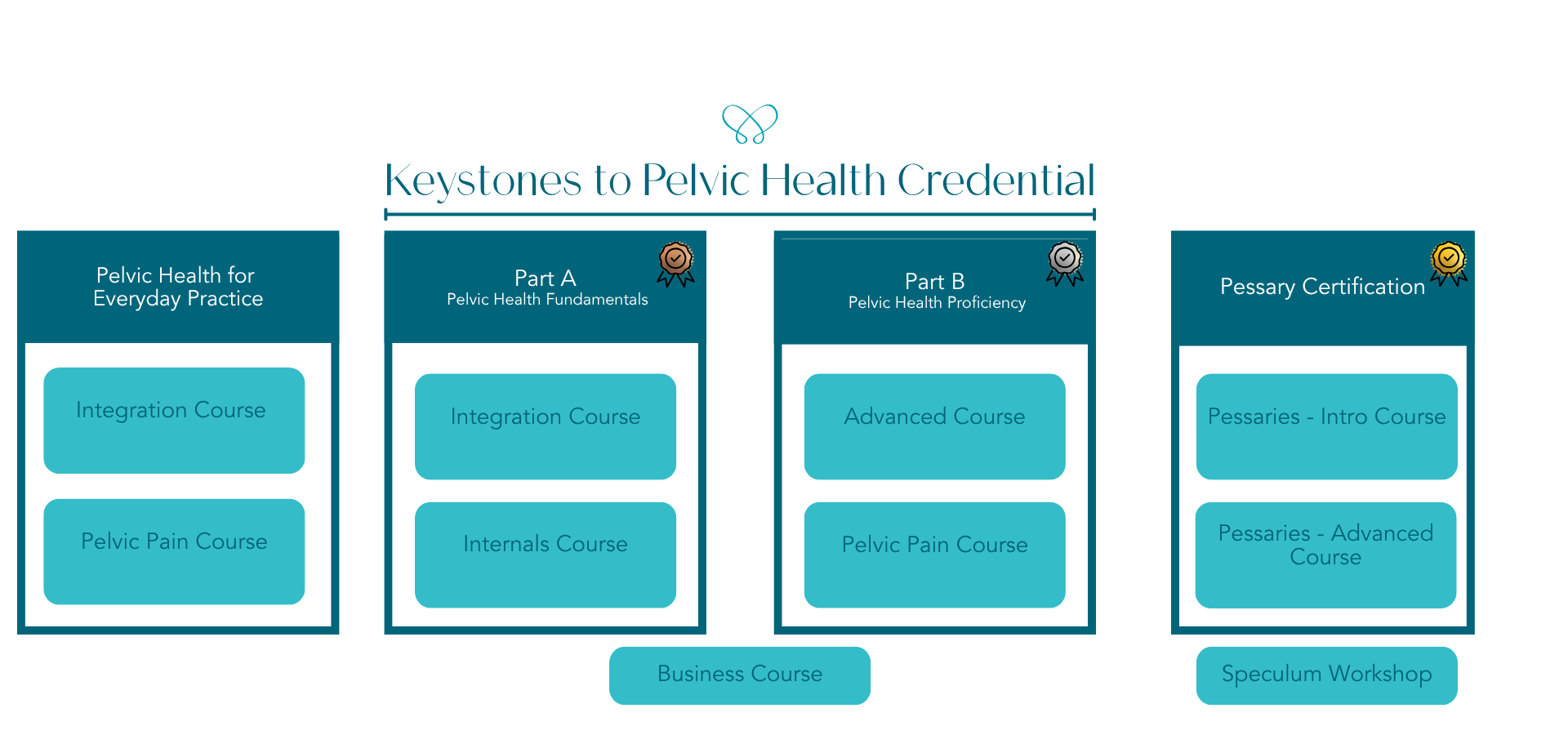
We will cover how important and easy it is to incorporate pelvic health screening questions into your practice to ensure you are aware of all aspects of your clients health.
You'll also learn how to externally palpate the superficial muscles of the pelvic floor safely through clothing.
We will review exercise guidelines for pregnancy and the post-partum time frames, as well as the current recommendations for DRAM and pelvic girdle pain.
You'll learn how to adjust your standard musculoskeletal care to account for pelvic health conditions as well as learn how to initiate pelvic floor muscle training programmes.
Sports and pelvic floor dysfunctions will be discussed, and you'll learn how to take a woman's hormone status into account in relation to your ongoing care of them.
We'll dive into male pelvic health and prostate surgery and how you can help these men on their road to recovery.
By the end of this course, your brain will be full-to-overflowing regarding pelvic health knowledge and how it applies to your current caseload of clients. You'll have new skills you can use immediately to help them.
No prior knowledge of pelvic floor, women's, men's, or gender health is needed to enroll in this course.
To assess and treat these maternal birth injuries and many other pelvic health conditions, internal examinations are required in most cases.
The focus of this course is learning how to assess patients using internal examinations (vaginal and rectal). I use realistic silicone models to teach you how to learn these skills.
Assessment of the pelvic floor muscles, levator ani avulsions, coccyx injuries, prolapses, and maternal birth injuries will be taught using the latest international guidelines.
Incontinence (urinary and faecal), pelvic organ prolapses, bowel issues, sexual dysfunction, and pelvic pain conditions in females and males will be introduced at a basic level.
This course is clinically focused and will give you the tools to enable you to immediately branch into the field of pelvic health (all genders), and to call yourself a pelvic health clinician.
Review specific techniques to assess and treat different maternal birth injuries including perineal and vaginal tears, levator ani avulsions, and coccyx injuries.
Learn objective assessment techniques to stage pelvic organ prolapse using POP-Q measurements
Expand your objective assessment skills by learning standing and sitting vaginal examinations.
Test your advanced palpation skills including assessing scarring, muscle tone, and different muscle contraction states.
Bladder, bowel, and food diaries will be critically appraised, as will common outcome measures used in pelvic health.
Adjunctive therapy such as pelvic floor training devices and apps will be discussed in detail, including where to access them.
The importance of gut disorders and the gut microbiome, sleep, nutrition, breathing, stress management, and exercise will be reviewed as they affect pelvic health.
Other pelvic health conditions and treatments covered include pelvic organ prolapse, sexual dysfunctions, menopause, prostate surgery, and hard flaccid syndrome. Common dermatological conditions and cancers of the pelvic region will also be reviewed.
We will also be discussing online in our private message board complex case studies and challenging you to think critically at all stages of the patient management process.
Common female and male pelvic pain dysfunctions such as endometriosis, vulvodynia, prostatitis, painful bladder syndrome, hard flaccid syndrome, surgical mesh injuries, gut pain syndromes, and more will be taught.
You will learn evidence-based management strategies to enable patients to reduce their pain and dysfunctions using a combination of education and hands-on approaches.
The course is evidence informed but also very clinically focused, to give you the ability to step into the role of fitting pessaries immediately with all the information and support you need and feel clinically confident by the end of the course.
Pelvic organ prolapse prevalence, risk factors, and incidence will be reviewed, and we will break down how different POP presentations affect your pessary selection.
We will discuss other conservative management strategies such as lifestyle changes/modifications, pelvic floor training, weight loss, and bowel and bladder health. Surgical options for pelvic organ prolapse will be reviewed.
Precautions and contraindications for pessaries will be discussed. We will dive deep into the clinical indications that suggest pessaries will be a suitable option for the patient.
Speculum use will be taught, with the focus on assessing vaginal mucosa integrity and the cervix. This training is to ensure the vaginal muscosa appears suitable for the use of pessaries. We are not covering speculum asssessments for pelvic pathologies.
Objective measurements of prolapse will be taught using POP-Q staging, SPOP-Q staging, and Baden-Walker grading. Outcome measures for assessing symptoms and quality of life will also be discussed to ensure you know that your patients' symptoms are improving with pessary use.
You will learn practical skills on how to select the pessary based on your bio-mechanical assessment of the patients' vaginal dimensions and levator ani muscles. Fitting of the three most common pessaries used (ring, cube, and Gellhorn) will be taught and you will practice alongside Melissa in the course videos.
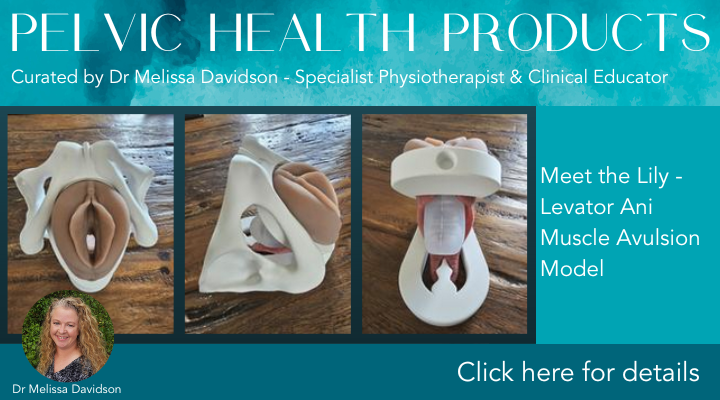
On the course videos, I use advanced silicone vaginal models to teach speculum exams, POP-Q staging, levator ani muscle avulsion palpation assessments, and pessary fitting. This unique vaginal model, named 'Lily' after the Mt Cook native wild flower, is a world first in silicone models.
Learning when and how to refer on for medical reviews when signs of complications or abnormalities will be discussed as well as when to refer onto allied health professionals.
Business and recall systems, and how to manage these within your patient management system will be discussed. Common suppliers of equipment and consumables, infection control measures, and fitting kit cleaning protocols will be provided.
Patient reports, patient medical screening request form, and patient education handouts (consent, self-management, and information on pessaries) will be reviewed and original templates will be given to you to use in your clinic.
You will also be given a copy of "The Beast", an complex Excel spreadsheet created by Simon – used for tracking all inventory related to pessary management, including supplies, fitting kit tracking, pessary tracking, and recall tracking. You'll also need to submit videos of yourself completing various practical skills.
We also offer ongoing support in a private forum for the first 12 months after the course is completed to all course participants. This is for information sharing, trouble shooting, asking clinical questions, networking, etc.
As part of the post-course requirements, we will be asking you to complete a logbook of the speculum exams completed, pessary fittings completed, a case study, a reflective statement, and a peer review. These activities will need to be completed after you complete the course over the following 6 to 12 months. We will also be asking to see a summary of your recall system, and health and safety procedures around pessary management in your clinic. Melissa will be reviewing and assessing all of these competency documents alongside your competency videos. These requirements are to ensure you reach acceptable skill and safety levels in all areas of pessary management.
Once you have completed your competency documentation successfully, your certificate of completion of the course will be issued.
In the PESSARIES Advanced course we are stepping things up to focus will be on learning how to fit and manage a wide range of other pessary types available on the market.
We will do a brief review of POP pathophysiology, looking at the bio-mechanical aspects of prolapses and how it affects our pessary selection and fitting success.
A quick review of vaginal exams, objective measures of POP, palpation of levator ani avulsions, and brief coverage of speculum examination basics will be done to ensure everyone is working at the same high level.
Each different pessary type will be reviewed with the focus on learning why to choose it and how to fit and manage it successfully.
Full demonstrations of inserting and removing each type of pessary will enable you to practice alongside Melissa in your location.
We'll also be reviewing and critically evaluating difficult case studies involving pessaries online in a private message board on our website.
To fill this gap, we offer a short workshop just focused on speculum training, covering assessment of vaginal mucosa and visual checking of the cervix. We are not covering pelvic pathologies on this workshop. We are using the speculum examination in this context to screen for abrasions/erosion of vaginal walls from pessary use only.
PLEASE NOTE: If you have done, or are planning to do our PESSARIES Intro course, you will already have covered everything that the Speculum Workshop covers.
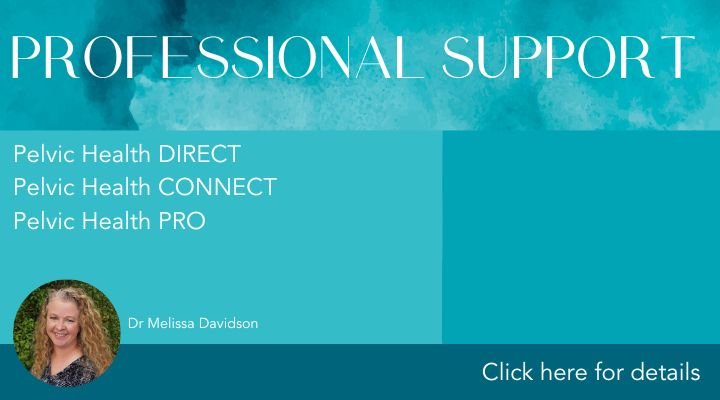
- Pelvic Health DIRECT. Online forum to ask Melissa your Pelvic Health questions. Join for FREE.
- Pelvic Health CONNECT. Private members group with private forum, monthly live group mentoring and training with Melissa, and access to resources for your Pelvic Health business. Paid membership.
- Pelvic Health PRO. One-on-one mentoring, training, or supervision with Melissa. Priced per hour. Discounts for Pelvic Health CONNECT members.
Each country has specific requirements for attending in-person courses, depending on your health profession.
For example, in New Zealand, physiotherapists can attend our courses in New Zealand without having to be registered by the Physiotherapy Board of NZ. While in NZ you are restricted from calling yourself a 'physiotherapist', but you can say you are a 'physiotherapist registered in ......(insert your country here).
Please check your health professional registration board in the country you want to attend the course in to confirm if you can attend the course in that country.
Any questions regarding this, please contact Melissa prior to enrolling.
No refund will be given once you have purchased the course and have access to the resources.